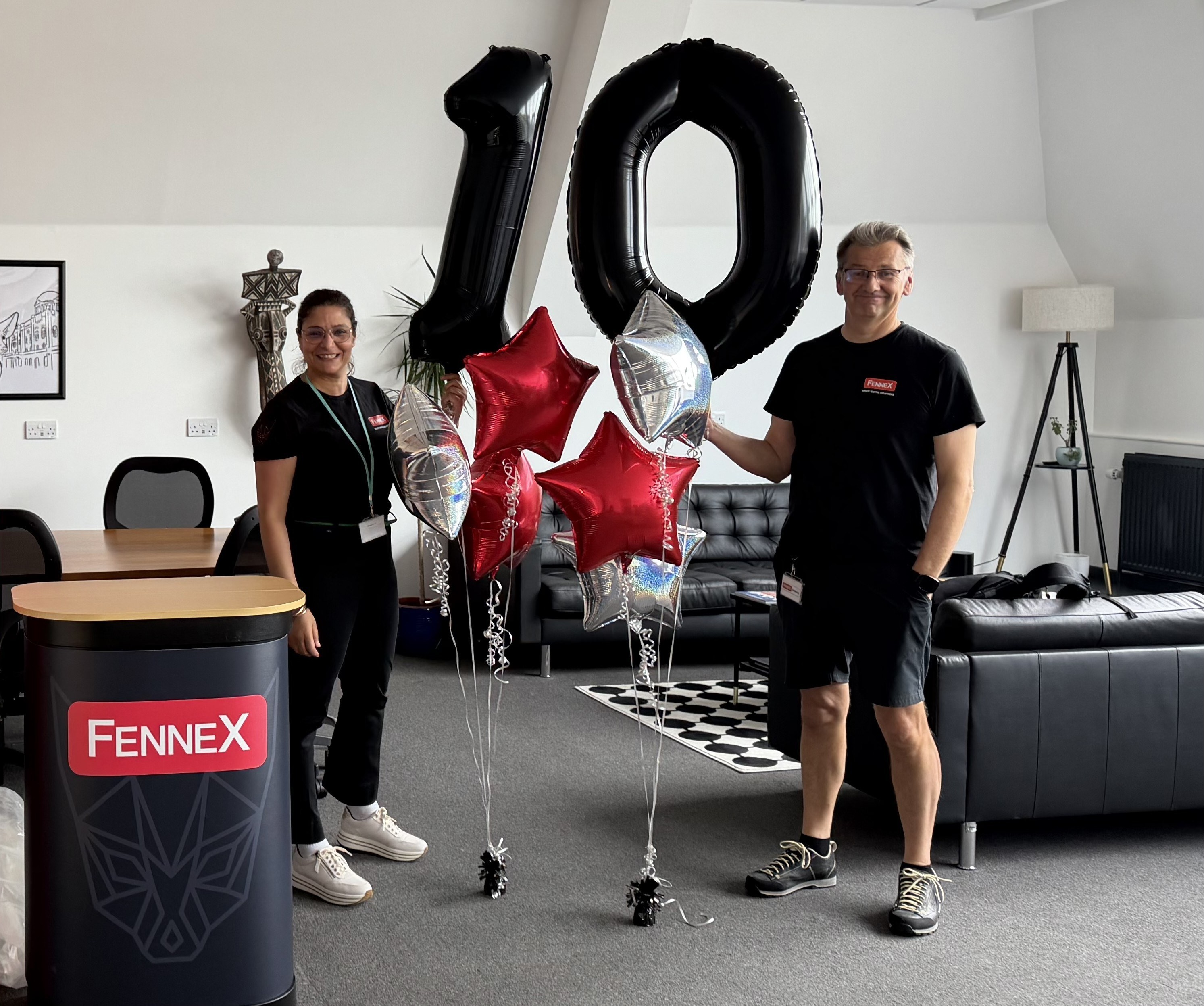
As Fennex marks its tenth anniversary, Founder and Managing Director Adrian Brown reflects on the journey so far, why the company was founded, and what comes next.
Looking back, what made you decide Fennex needed to exist?
Truthfully, there wasn't one defining moment. I'd spent a number of years working in the industry and had developed a real desire to apply a more systematic and digital approach to driving cultural and behavioural change, particularly in high-risk industries where the consequences of poor decisions can be devastating for people, the environment, assets and reputation.
Having spent many years working in technology, I'd seen first-hand how the right systems can genuinely change the way organisations behave, not just the way they work. So I decided to undertake an MBA to add a few more tools to the toolbox before leaving Transocean in 2015, and we officially started trading as Fennex in 2016.
What were those early years really like?
The reality of building a business was far removed from the business plan. It really was a rollercoaster: one week there would be a real high, the next there'd be disappointment. That's just the reality of starting a business.
Some consulting work helped fund the growth of the company while we developed our software and started building a customer base, and looking back, those early years taught me that persistence matters more than almost anything else. Since then we've been fortunate enough to grow profitably year after year, which is quite unusual for a software company.
A huge part of that comes down to the people we've been lucky enough to bring into the business. We've always tried to hire people who are curious, who genuinely care about customers, and who enjoy solving problems, and that's made a huge difference.
Four years later, Nassima Brown joined the business. How did that change things?
Massively. We complement each other really well because we naturally enjoy different things.
I enjoy building products, solving technical problems and thinking about how technology can solve industry challenges. Nassima is the perfect networker: she enjoys building relationships, connecting people and creating opportunities, whether that's through industry partnerships, grants or helping us break into new markets.
She's brilliant at the things I don't particularly enjoy, and she's probably the first to admit she's quite happy leaving the technical side to me. It works.
How has the industry's attitude towards technology changed over the last ten years?
Historically, industries like oil and gas invested heavily in engineering technology, but when you walked into the office there were still huge inefficiencies: emails, Excel spreadsheets, disconnected systems, and people spending more time finding information than actually using it. That created a real opportunity to build decision support tools that removed those inefficiencies and helped people make better decisions.
Since around 2018, and particularly with the emergence of AI, technology has moved from being an IT discussion to something that's firmly on the agenda of CEOs and executive teams, with people increasingly seeing digital technology and AI as business enablers rather than just software.
For us, the opportunity has always been the same: apply technology where it genuinely makes a difference. If it doesn't improve safety, efficiency or decision making, it probably doesn't need to exist.
Fennex has become increasingly associated with AI. How do you see its role?
AI is hugely exciting, but it's also easy to get carried away. We've never been interested in adding AI because it's fashionable; the question we always ask is, "Does it genuinely help the user?"
Sometimes that's generating a risk assessment or helping someone write a report, sometimes it's identifying patterns in operational data that no person could realistically spot themselves, and increasingly it's about supporting better decisions before incidents happen. That's where I think the real value lies.
The technology itself isn't the goal. Better outcomes are.
Is there a customer relationship that sums up why Fennex exists?
I think our relationship with Noble Corporation probably does. They were one of our earliest believers and shared a similar passion for what technology could do.
Over the years we've worked together to develop solutions that help move organisations from simply reporting what happened to actually understanding what might happen next, which is a much more powerful place to be. Seeing technology genuinely help drive cultural change, reduce risk and give people better information to make decisions has been one of the most rewarding parts of the journey.
Fennex has stayed headquartered in Aberdeen throughout its growth. Why?
People ask that quite a lot. I've lived and worked in several different countries over the years, but for quality of life Aberdeen is still one of the best places we've lived: you've got excellent universities producing great talent, fantastic engineering capability, and the Highlands, the coast and everything that comes with that.
Yes, the winters can be pretty miserable, but you get past those and it's a brilliant place to live and build a business. We've never felt the need to be somewhere else to build a global company.
Where do you see Fennex in another ten years?
That's probably the hardest question to answer, because the pace of change is incredible. Projecting ten years into the future is almost impossible, since I think the next two or three years alone will completely change the way software is developed and used, and connected workers, intelligent applications and AI are going to accelerate enormously.
Our ambition is simply to continue being recognised as an industry leader in applying technology where it makes sense, so we'll keep listening to customers, solving real problems and adapting as technology evolves. That's always been the goal.
Looking back, what are you most proud of?
Without doubt, it's the culture we've built. Throughout my career I've been fortunate enough to work with some exceptional leaders, but I've also experienced occasions where integrity and core values disappeared, and I wanted Fennex to be different.
Integrity, respect, customer focus, family first: those aren't just words for us, they're principles we genuinely try to live by. One thing somebody once said to me has always stuck: "There's no softer pillow than a clear conscience." I genuinely believe that, because you lose your integrity once and it's incredibly difficult to get it back.
Looking back now, I have absolutely no regrets about leaving what was a successful career. I could quite happily have stayed until retirement, but building Fennex has been far more rewarding, far more exciting and far more fulfilling than I ever imagined.
You only live once, and had I never taken the chance, I think that would have been the biggest regret of all.